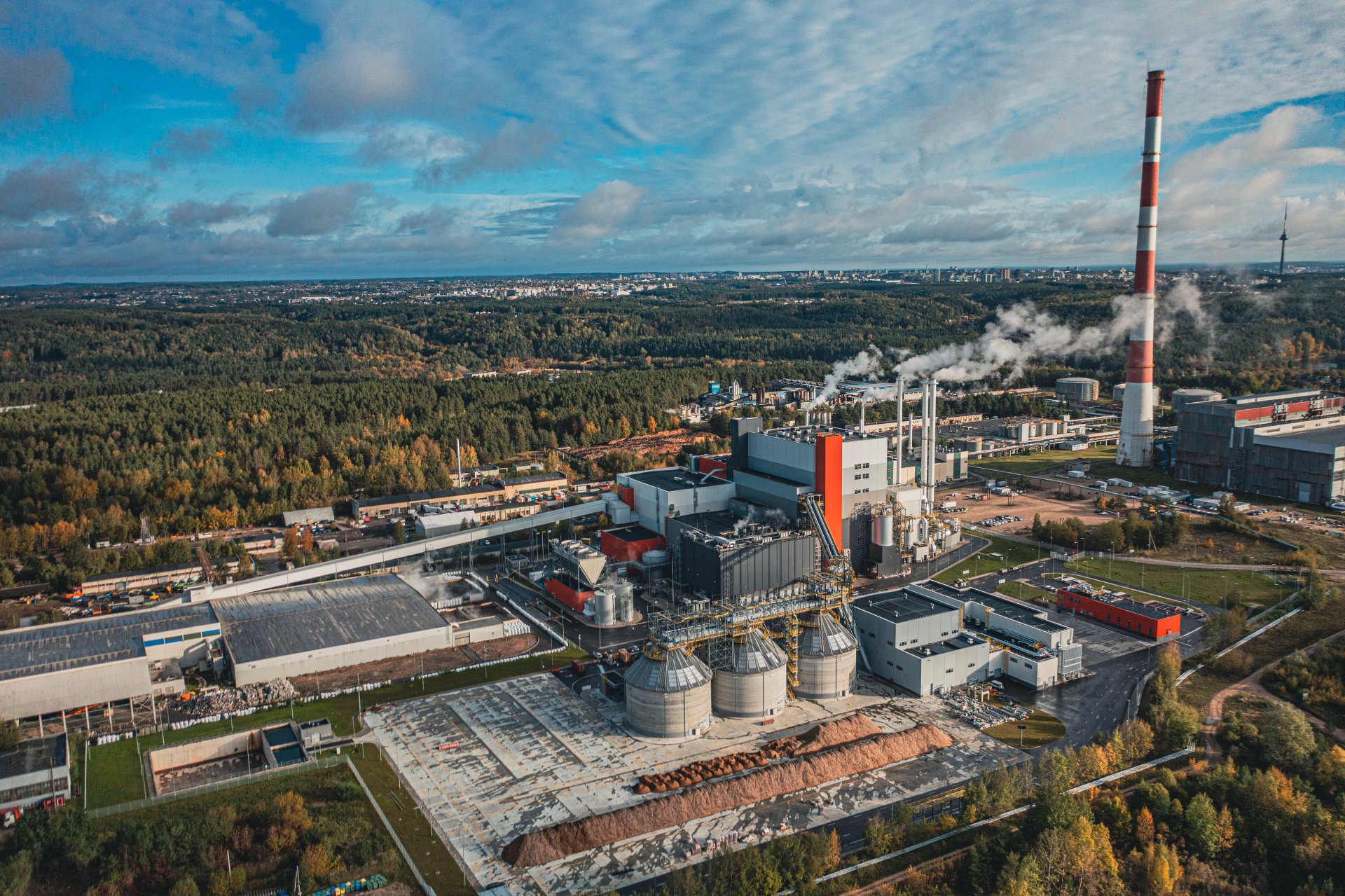
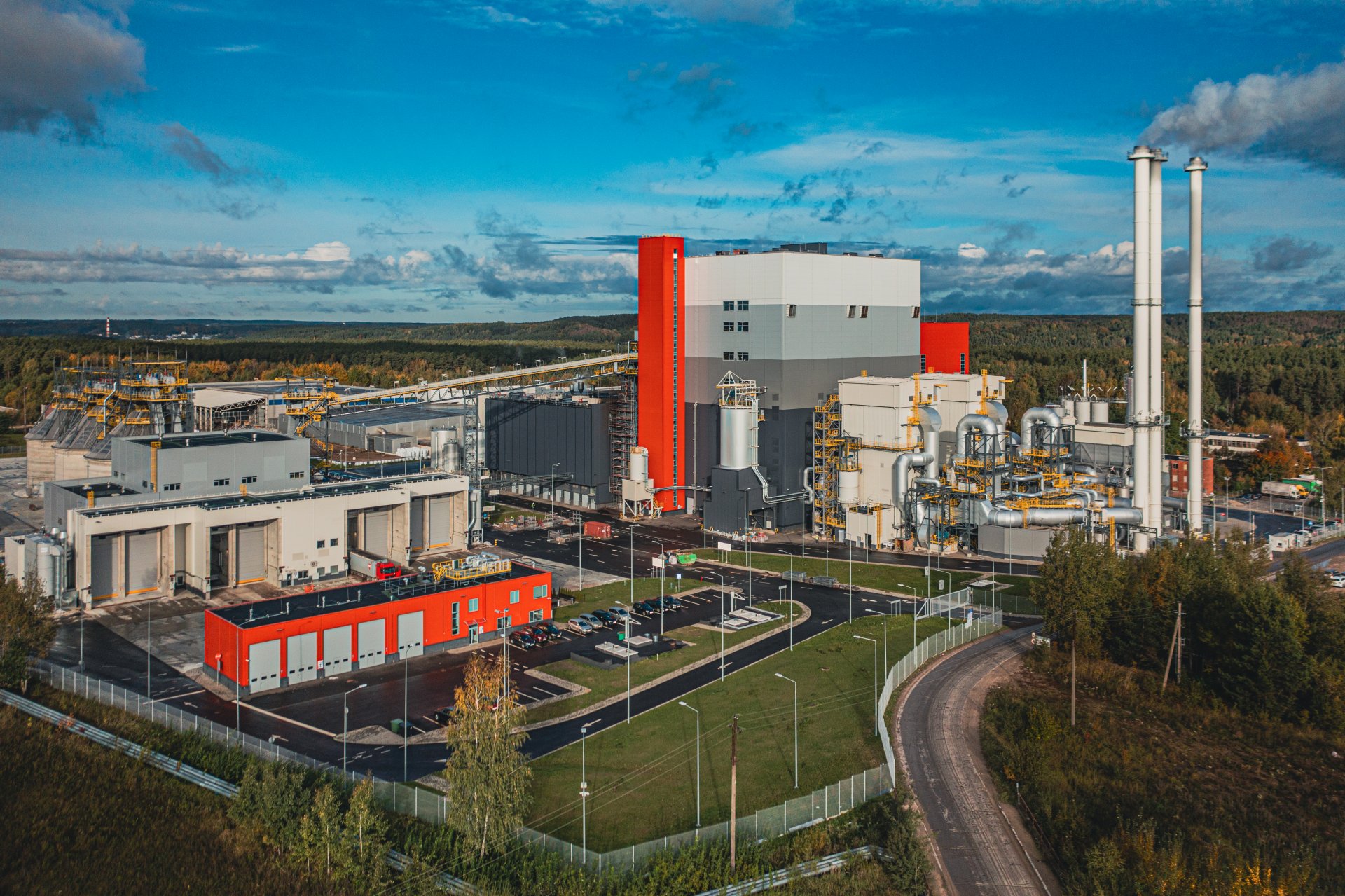
The Vilnius Combined Heat and Power Plant (CHP) – one of the most advanced in Europe – can cover up to 50% of Vilnius' centralized heating demand and generate enough electricity to power approximately 230,000 to 300,000 households.
The plant uses non-recyclable municipal waste left over after sorting, as well as locally sourced renewable biomass, as its primary fuel. The waste-to-energy unit consists of one boiler, while the biomass unit is made up of two boilers.
Countries such as Japan, Sweden, Denmark, and Finland are global leaders in converting non-recyclable municipal waste into energy, significantly reducing landfill volumes. In Vilnius, the CHP plant processes up to 200,000 tonnes of non-recyclable municipal waste annually, which is equivalent to about 80 Olympic-sized swimming pools, turning it into heat and electricity.
The plant places particular emphasis on environmental protection – it is equipped with state-of-the-art flue gas cleaning technologies that meet the EU’s Best Available Techniques (BAT) standards. Emissions are continuously monitored, and the data is made publicly available.
EU funding
The Vilnius CHP project was implemented with funding from the European Union, the European Investment Bank, and private capital.
On October 13, 2017, the Lithuanian Minister of Energy signed a decree allocating €91 million from the EU Cohesion Fund under the 2014–2020 EU Structural Funds Investment Programme, Priority Axis 4, Measure No. 04.1.1-LVPA-V-108, titled "Promotion of High-Efficiency Cogeneration in Vilnius."
As part of the project, a high-efficiency biomass cogeneration plant was constructed. The plant's nominal thermal capacity was required to be no less than 158 MW, and the electric capacity – 70 MW. The plant was designed to use biomass, primarily wood chips, with an annual consumption of approximately 400,000 tonnes.
The main objective of the project was to increase energy production through a high-efficiency cogeneration process using renewable energy sources. The total value of the project exceeded €209 million.
Additionally, on August 23, 2017, the Minister of Environment signed a decree, and on October 18, 2017, Vilnius CHP signed an agreement with the Environmental Project Management Agency (EPMA) under the Ministry of Environment for nearly €49 million in EU Cohesion Fund investment. This funding was provided under the 2014–2020 EU Structural Funds Investment Programme, Priority Axis 5, Measure No. 05.2.1-APVA-V-022, titled "Development of Municipal Waste Incineration Capacity."

UAB VILNIAUS KOGENERACINĖ JĖGAINĖ
Address for correspondence: Paneriškių g. 25, LT-02300 Vilnius
E-mail: vkj@ignitis.lt
Company's code: 303782367
VAT payer's code: LT100009225717
s. a. Swedbank, AB: LT987300010150805550
PROJECT CONTACTS
Address: Laisvės pr. 10, LT- 04215 Vilnius
E-mail: vkj@ignitis.lt
Media contact: rima.aukstuolyte@ignitis.lt